Xero Review 2026: Features, Pricing, Pros & Cons (Is It Worth It?)
6
minute read
11
sections
October 8, 2026
last updated
Ahmed Raza
reviewed by

Short answer: Xero is a solid pick for a lot of small businesses, freelancers, agencies and ecommerce sellers who want cloud accounting, bank reconciliation, invoicing and accountant collaboration in one place. The catch? The right plan depends heavily on your country, your transaction volume, your payroll needs, and whether you need advanced inventory.
I’m an accountant, so I read Xero differently from a typical software review. Whether the dashboard looks nice isn’t the question. I care about whether it keeps the books accurate, makes reconciliation quicker, gives me the information I actually need, and stays practical as the business grows.
Affiliate disclosure: This article may contain affiliate links. If you sign up through one of them, we may earn a commission at no extra cost to you. That doesn’t change how I assess the software, and I’ll point out where I think another option makes more sense.
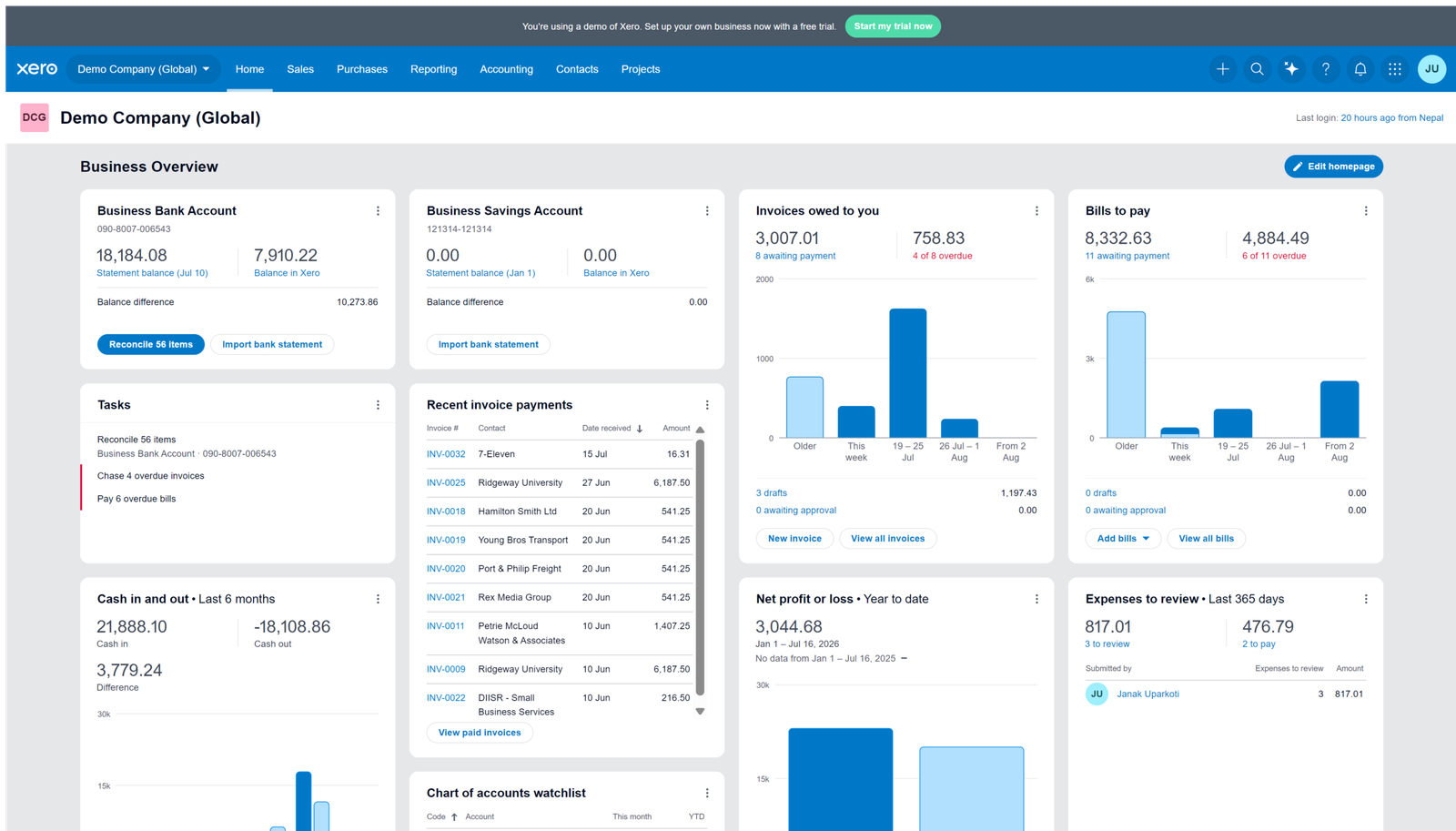
How this was tested: I opened a Xero trial account and worked through the dashboard, invoicing, and bank reconciliation. Screenshots and screen recordings below are from those accounts, captured in August 2026.
Watch the Xero Review

Xero Review 2026 at a Glance
| Area | My take |
|---|---|
| Best for | Small businesses, service firms, freelancers, agencies and many ecommerce businesses |
| Cloud accounting | Yes |
| Invoicing | Strong |
| Bank reconciliation | One of Xero’s biggest strengths |
| Multi-currency | Available on eligible higher-tier plans, depending on region |
| Inventory | Good for many small businesses, but advanced inventory may require an add-on or third-party app |
| Accountant collaboration | Strong |
| Pricing | Varies by country and plan |
Who Should Actually Consider Xero?
Xero earns its place when you want the accounting to live in the cloud and do the repetitive bookkeeping around it. Bank feeds, reconciliation, invoicing, bills, reports and working with your accountant — that’s where it shows up.
I’d look at it especially if you’re a consultant, agency, freelancer or professional services firm, or a small business that’s outgrown the spreadsheet and wants a proper accounting workflow.
Ecommerce sellers can get a lot out of Xero too, with one important distinction. Xero can be the accounting layer at the centre of your stack, while specialist apps handle the deeper inventory, order management and multichannel work.
Running something very simple, with a handful of invoices and almost no bookkeeping complexity? Xero may be more software than you need. A simpler or free product probably makes more sense there.
How I Look at Xero as an Accountant
A review should be honest about what the reviewer actually knows. I’m not going to pretend every feature on this page came from me clicking it when it didn’t. My angle comes from accounting and bookkeeping work, software research, and watching how these tools behave in real business workflows.
Where I can judge something from accounting principles and official product information, I’ll explain what it does and why it matters. Where a result depends on your country, your bank, your plan or a third-party integration, I’ll say so rather than pretend one setup is universal.
That distinction matters with Xero, because the product genuinely isn’t the same everywhere. Plan names, pricing, tax features, payroll and payment options all move by country.
Xero Pricing: Look Beyond the Introductory Offer
Xero pricing changes by region, so don’t treat one country’s table as a worldwide price list. As an example, Xero’s US pricing page currently lists Early at $25 per month after its introductory period, Growing at $55, and Established at $90. That same page currently advertises 80% off for the first three months for eligible new US customers.
The UK is a different story. Xero currently lists UK plans in pounds and advertises an 80% discount for the first six months for eligible new customers, subject to the offer terms. That’s exactly why I always show the country and the date when I talk about a Xero promotion.
The important number isn’t the promotional price. It’s the normal renewal price, the included limits, the add-ons, the payment fees, and whether you actually need the higher plan.
What the US Plans Look Like
Taking the current US pricing as the example: Early is aimed at businesses with basic accounting needs and includes a limit of 20 invoices and 5 bills. Growing drops those basic transaction limits and adds more automation and dashboard features. Established adds tools like multiple currencies, project tracking, expense claims and deeper analytics.
Those differences say more than calling one plan “better”. If you only need basic invoicing and reconciliation, paying for the top tier doesn’t magically make sense. If you need multicurrency or project tracking, the higher tier suddenly becomes much easier to justify.
My advice: work out the normal monthly cost after the promotion before you sign up. Promotions are lovely, but the renewal price is the one you’ll live with.
Bank Feeds and Reconciliation Are Where Xero Shines
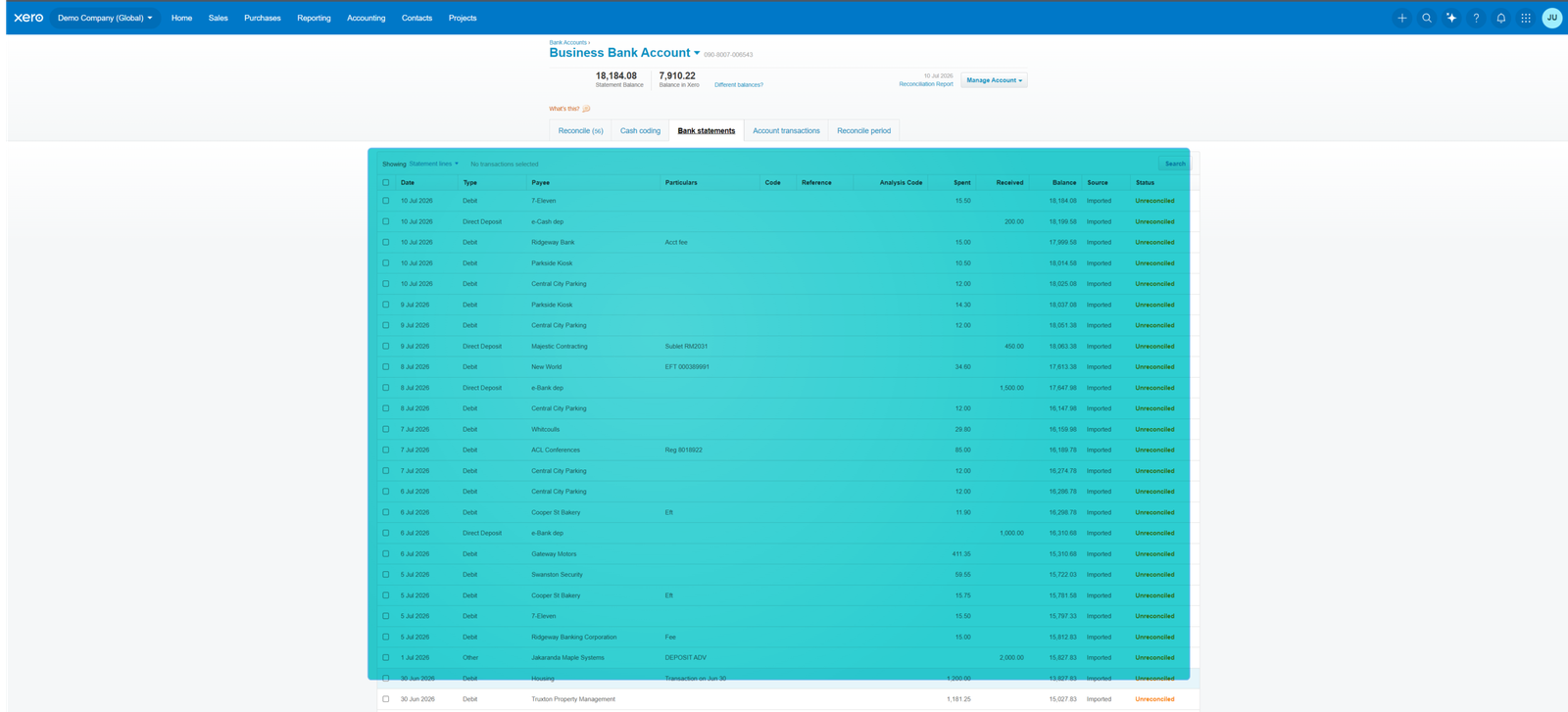
This is the bit of cloud accounting that genuinely cuts bookkeeping friction. Xero pulls transactions from supported banks into your accounts, where you can match them against invoices, bills, transfers and other transactions.
It also has suggested matches and bank rules. In plain English, the system spots recurring patterns and takes some of the repetitive categorising off your hands.
But don’t confuse automation with accuracy. A suggested match still deserves a look, especially with transfers, tax payments, loan repayments or anything unusual.
Bank availability is regional too. Xero says you can check whether a particular bank and account type is supported from inside Xero. If there’s no direct feed, you can import statement data through supported formats or other methods.
Invoicing Is Simple, but the Workflow Matters More
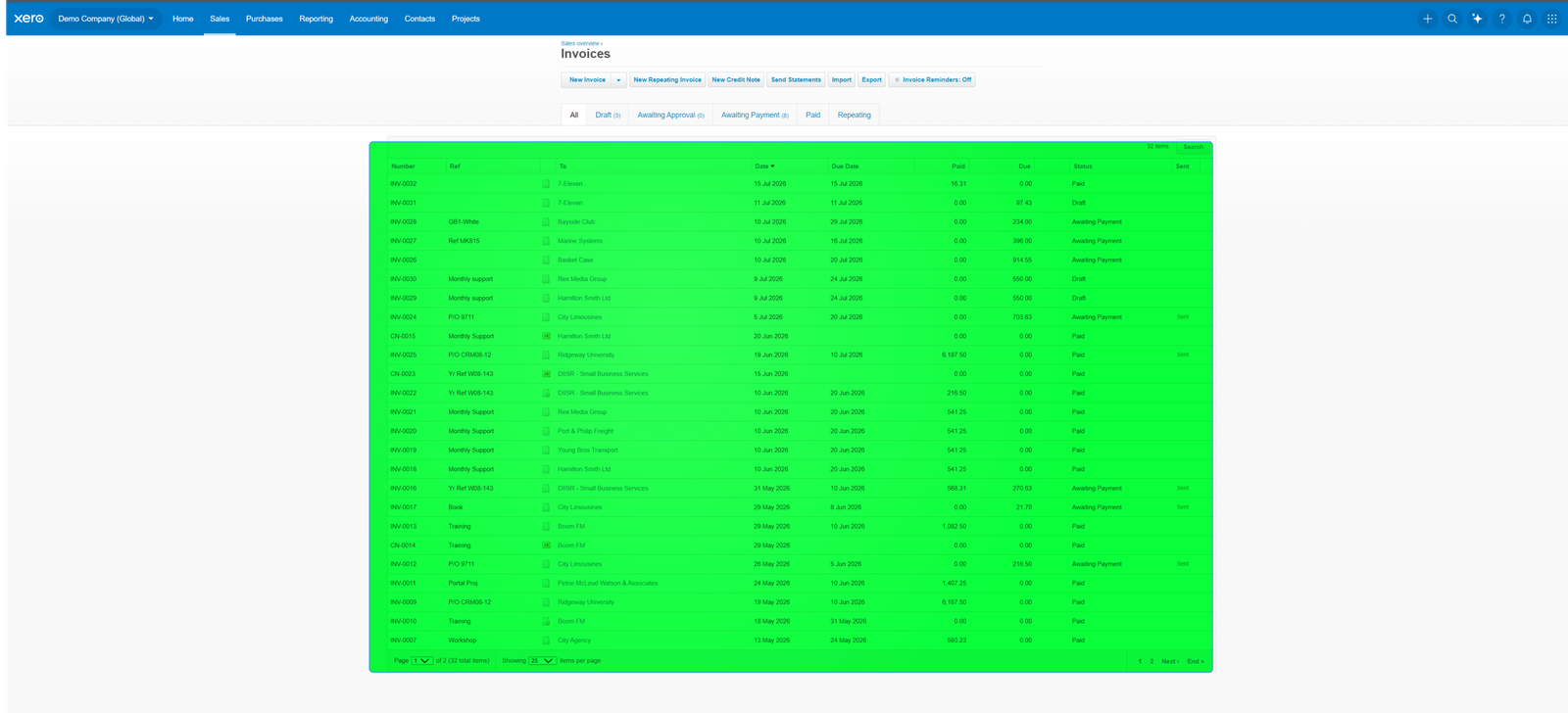
Xero does the basic invoicing loop well: make an invoice, send it, track it, record the payment. Online payment options can make that smoother, though the fees and the available providers depend on your market and setup.
From an accounting seat, the useful part isn’t the template. It’s what happens after you hit send. The invoice needs to reach accounts receivable, payments need to match up, and overdue balances need to stay visible.
So I’d take a slightly plainer invoice screen with clean reconciliation over a gorgeous template that creates more bookkeeping work later, every time.
Bills, Expenses and Document Capture
Xero has tools for recording bills and expenses, and its plans include Hubdoc for document capture. That’s handy if you’d rather keep supporting documents next to the accounting records than lose receipts in a random folder.
The review step still matters most. Capture and automation can cut data entry, but a human needs to check the supplier, the account, the tax treatment and the amount before it becomes part of the books.
Reporting: Useful for Owners and Accountants
Reporting is a big reason Xero works well for small businesses. The value isn’t having loads of reports. It’s having numbers an owner and an accountant can both use to answer real questions.
How profitable was the month? Who still owes you money? Which expenses are creeping up? Is cash getting tight? Those questions beat staring at a dashboard full of colourful digits.
If you use Xero, I’d learn the reports your accountant actually relies on rather than trying to understand every one in the system.
Multi-Currency and Ecommerce Need a Closer Look
Multi-currency is genuinely useful if you invoice customers or pay suppliers in different currencies. Availability depends on the plan and the region though, so check your local Xero pricing page before upgrading purely for this.
For ecommerce, I’d treat Xero as the accounting layer and not assume it replaces your operational systems. Shopify, Amazon, payment processors and inventory tools throw off a lot of orders, fees, refunds and settlement transactions.
The hard part isn’t importing every order. It’s getting the right sales, tax, fees, refunds and payouts into the ledger and reconciling them properly. On bigger or messier ecommerce operations, a specialist integration is often worth the extra cost.